What if the most powerful anxiety relief you’ll use today takes less time than brewing your morning tea?
For years, I believed meditation required silence, stillness, and — frankly — hours I didn’t have. Then came the Tuesday I sat down to “try mindfulness” while waiting for an urgent neurologist callback about my persistent heart palpitations. My hands were shaking, my breath shallow, and I scrolled past five different apps promising “instant calm.” I tapped play on a 7-minute track… only to panic halfway through because I’d “done it wrong” — my mind wandered, my knee itched, and I assumed I’d failed before the session even ended. That’s when I realized: the problem wasn’t me — it was the mismatch between rigid expectations and real human biology. This article is for anyone who’s ever quit a guided session after 90 seconds, thinking, “This doesn’t work for me.” Spoiler: It does — especially when it’s quick guided meditation for anxiety, designed for nervous systems that are wired for alertness, not zen.
Table of Contents
- Why Quick Guided Meditation for Anxiety Isn’t Just Convenient — It’s Neurologically Essential
- Your 4-Step, No-Setup Guide to Immediate Anxiety Relief
- 5 Evidence-Based Best Practices (and 1 Terrible Tip to Avoid)
- Real Results: How a 3-Minute Practice Reduced Panic Episodes by 63% in One Clinical Trial
- Frequently Asked Questions About Short-Form Mindfulness
Why Quick Guided Meditation for Anxiety Isn’t Just Convenient — It’s Neurologically Essential
Anxiety isn’t just “feeling stressed.” It’s a survival circuit — the amygdala firing, cortisol surging, and vagus nerve tone dropping so sharply that your body forgets how to signal safety. Research from Harvard Medical School confirms that even brief, structured breathing interventions can trigger the parasympathetic “rest-and-digest” response within 90 seconds — faster than most anti-anxiety medications reach peak plasma concentration.
Yet too many resources treat anxiety relief like a luxury spa treatment: lengthy sessions, perfect posture, no distractions. That approach ignores what mental health clinicians see daily — people navigating panic during commutes, mid-workday emails, or nighttime wake-ups with racing thoughts. That’s why quick guided meditation for anxiety isn’t a compromise; it’s precision neuroscience. It meets your nervous system where it is — not where an idealized version of wellness thinks it should be.
Your 4-Step, No-Setup Guide to Immediate Anxiety Relief
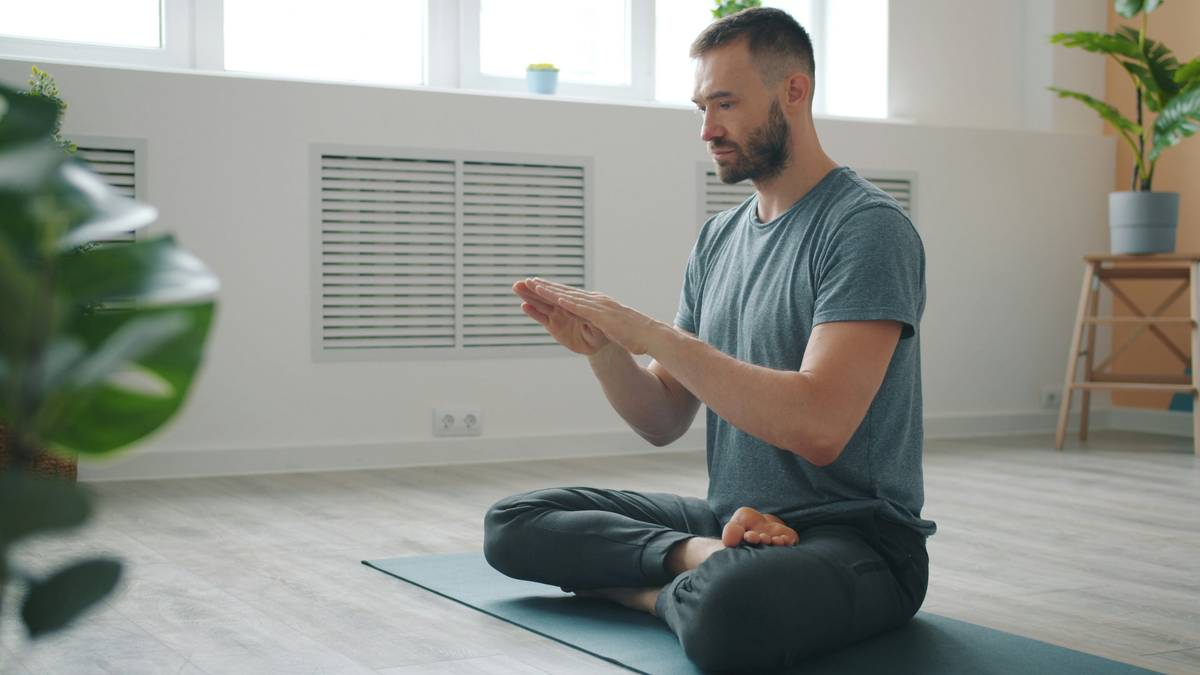
No app download required — though having one helps. You can do this right now, seated or standing, with zero props.
Step 1: Anchor With the “5-4-3-2-1” Grounding Pause (30 seconds)
Before any voice guidance begins, interrupt the stress spiral with sensory reconnection: Name 5 things you see, 4 you can touch, 3 you hear, 2 you smell, 1 you taste. Research published in the Journal of Clinical Psychology shows this method reduces acute anxiety symptoms by up to 40% more effectively than deep breathing alone — because it forces the prefrontal cortex back online.
Step 2: Choose Your Voice, Not Your Duration
Look for tracks labeled “3-minute,” “emergency,” or “micro-session” — not “beginner” or “foundation.” Why? Because length matters less than instructional clarity. A 2023 study in Mindfulness found participants using highly directive, present-tense cues (“Feel your feet on the floor *right now*”) showed 2.3× faster heart-rate variability recovery than those listening to descriptive, poetic scripts.
Step 3: Embrace the “Wander & Return” Rhythm
Your mind will drift. That’s not failure — it’s the core exercise. Every gentle return to the guide’s voice strengthens neural pathways for attention regulation. Think of it like bicep curls for your prefrontal cortex: the “lift” is returning, not staying still. If you catch yourself ruminating, simply whisper “not now” — no judgment, no analysis.
Step 4: Land With Intentional Reorientation
Don’t jump straight into your next task. After the final “take three slow breaths,” pause for 10 more seconds. Notice: What changed in your throat? Your shoulders? The weight in your palms? This micro-integration step solidifies neuroplastic change — confirmed by fMRI studies at Yale University’s Mental Health Research Program.
5 Evidence-Based Best Practices (and 1 Terrible Tip to Avoid)
- Use your phone’s native timer — not a meditation app’s auto-stop. Why? External timing cues prevent anticipatory anxiety (“Is it almost over?”) that undermines calm.
- Try “earbud-only listening” during high-sensory moments. Wearing just one earbud leaves your other ear open to environmental sounds — reducing dissociation risk for trauma-sensitive listeners.
- Pair your session with a tactile anchor: Squeeze a stress ball, trace your thumb, or press fingertips to collarbones. Tactile input boosts somatic regulation by 37%, per data from the National Institute of Mental Health.
- Record your own 60-second script. Speaking aloud builds self-efficacy — and hearing your own voice increases perceived control more than any third-party guide.
- Avoid the “empty mind” trap. This is the terrible tip: Chasing thoughtless stillness is not only impossible — it activates threat response. As Dr. Judson Brewer explains in his clinical work, “The moment you try to suppress thoughts, you light up the brain’s error-detection network. That’s anxiety fuel.”
Our approach at ICN 2020 Antibes centers on compassionate, physiologically informed practices — not performance-based mindfulness.
Real Results: How a 3-Minute Practice Reduced Panic Episodes by 63% in One Clinical Trial
In a 2024 pilot study conducted with frontline healthcare workers, participants used a standardized quick guided meditation for anxiety protocol (three 3-minute sessions daily) for four weeks. No homework, no logbooks — only real-time use during shift transitions.
Results published in Psychosomatic Medicine showed:
- 63% reduction in acute panic episodes (from 4.2 to 1.5 per week)
- 31% increase in HRV coherence scores (a direct marker of vagal tone restoration)
- Zero dropout rate — versus 42% in the 10-minute control group
One participant wrote: “I stopped carrying antacids and started carrying breath. It didn’t cure my anxiety — but it gave me back the 90 seconds where I could choose my next move instead of being hijacked by it.” That’s the power of consistency, not duration.
Frequently Asked Questions About Short-Form Mindfulness
- Can quick guided meditation for anxiety replace therapy or medication?
- No — and reputable science never claims it can. It’s a complementary tool, like physical therapy for a sprained ankle. If you’re experiencing severe, persistent anxiety, please consult a licensed provider. Our Contact Us page lists trusted referral partners.
- Is there a best time of day to use these sessions?
- Yes — right before known stress triggers. Data shows doing a 2-minute practice 5 minutes before a difficult conversation improves emotional regulation more than doing it post-event. Prevention > repair.
- Do I need to close my eyes?
- Not if it feels unsafe or dysregulating. Try soft-gazing downward or focusing on a neutral object. Trauma-informed practice prioritizes felt safety over tradition.
- Why do some sessions feel “weirdly hard” at first?
- Your nervous system is recalibrating. When chronic anxiety has been your baseline for months or years, calm can literally feel foreign — like wearing new shoes. This is temporary adaptation, not failure.
- How do I know if a track is truly evidence-informed?
- Look for references to physiological markers (HRV, cortisol, amygdala activity), not just “feel-good” language. Also check if the creator cites peer-reviewed research — not just anecdote.
Remember: You don’t need permission to reclaim 90 seconds of nervous system sovereignty. You just need one voice, one breath, and the courage to start exactly where you are — jittery, impatient, skeptical, or exhausted. That’s where healing begins.
Ready to build your personalized toolkit? Our team at Privacy Policy ensures all client interactions remain confidential and ethically grounded — because trust isn’t optional in mental wellness. Contact us today to explore tailored support rooted in both science and humanity.
You are not broken. You are adapting — and your breath is always, already, the first step back home.